A blog of everyday life and traveling experience.

Tampilkan postingan dengan label jerman. Tampilkan semua postingan
Selasa, 28 Desember 2021

Changing Blue Card to Permanent Resident Card (Niederlassungerlaubnis) in Germany

 Hello everyone!

It has been more than a year since I got my German permanent residency, and after a long wait, here you go: the promised post about how I changed my Blue Card to Permanent Resident Card for Germany.

For some of you who did not know, I changed my student visa to EU Blue Card back in 2018 when I started my full-time job (you can read my complicated experience here). I only had a limited blue card that was only valid for the period of my work contract + 3 months (the time window to find another job), which means my Blue Card was only valid until January 2021. 

I did some research already about the alternative of the possibility of the next steps, although to be honest, I was also having the pressure that I wouldn't get a contract extension at work and had to find another job, which meant things would get a tad complicated had that happened. 

  1. The first alternative was just to simply extend the blue card with another blue card. From what I've heard, if you extend the blue card, at least it wouldn't be bound to your current company (in my previous blue card I received an additional letter that said that my blue card was only valid when I worked in the company).
  2. The second option was to change the blue card to a permanent resident permit. And since it's no secret that I hate German bureaucracy, of course, I'd try my best to go with this flow. 
Okay, long story short (skipping the dread months when I was unsure about my contract), I got my job contract extension to a permanent one, which meant it would at least make my application for permanent residency easier. 

THE DIFFERENCE(S) between Blue Card and Permanent Resident
  • Blue card has an expiration date, while permanent resident well.. supposed to let you stay as long as you want -- they simply can't "kick you" out easily. However, noted that in your blue card, they will put "valid until" your passport expiration dates.
  • Blue card tied you with your employer, while permanent residency does not, which means you're free to work as anything, and now even without a minimum salary. 
  • No unemployment benefits for blue card holders, while permanent residents are eligible to apply for unemployment benefits. 

REQUIREMENTS
  • You have to be at least in possession of the blue card for at least 33 months before applying.
    • However, this can be shortened to 21 months if you have German B1 certificate.
    • I did my B1 certificate in Goethe 10 years ago (2011), but I lost the certificate, and since they did not accept my RWTH Aachen's DSM's (Deutsche Sprachprüfung für Master-Studierende), I either had to redo my test or waited for another 11 months. 11 months seems like a long time and also it meant I had to renew my blue card in between, so that was why I decided to do my B1 test again. Unfortunately, the earliest available exam was at the end of August, so I had to wait a bit. A bit of advice though, do not lose your B1 certificate, because it's pretty expensive to take them again!
  • You have some knowledge of the German language (A1 for 33 months, B1 for 21 months)
  • You are independent and you don't need any third-party support to finance yourself in Germany
  • You have paid the Renteversicherung for 33 months or 21 months (if you have Blue Card)
  • You have enough space for living.
DOCUMENTS TO PREPARE
If you think you have fulfilled all the criteria above, then congratulations! Here are the documents that you'll need to send via email/bring in person: 
  • Salary slips (they asked for the last 3 months in the beginning, but after I send them all, they again asked for the complete slip salary of the Year 2020)
  • Proof that you have paid Renteversicherung for 21 or 33 months. How to get it: 
  • B1-certificate
  • Permanent work-contract
  • Certificate of employment (they will provide the form) that needs to be signed by your employer
  • Housing certificate (they will provide the form) that needs to be signed by your landlord
HOW TO (in a nutshell)
The process below is not an absolute "how-to", it is based on my experience. I think the process would vary depending on your Ausländeramt. I got lucky because since I moved to Sindelfingen, the process of everything related to Ausländeramt (visa, sponsor letter, and so on) was easier than when I lived in Aachen. 
  1. Send an email stating the intention to change your current resident permit to permanent resident. 
    • Again, this varies from person to person. In my Ausländeramt, they accept phone calls and emails, and since I prefer to have it written somewhere, I send them an email instead. 
  2. After sending them back all the documents they required, they'll send you an appointment. 
  3. Come to the appointment with all the documents and 110€ money (some only take cash, some have a machine where they took EC-Karte). Do not forget to ask where you need to pick up the card once they're ready!
  4. Ta-da, they'll give you a paper stating that you're now having a permanent residence. However, your card could be picked up normally after 6 weeks. 
  5. After some weeks, you will receive a PIN for your new card. Normally, if you have received this, you can already take the card in 2 weeks. 
  6. Take your new shiny permanent-residence card. For Sindelfingen, I need to take it in Bürgeramt (where you do your anmelden). Due to Corona, I had to make an appointment, but normally, people could simply take it without any appointment. 
GOOD TO KNOW that...
  • Your "permanent" resident card has an expiration date! My card's expiration date is the same as my passport. So far, I haven't researched on how to extend it, but I will update it here once I know (I'll be back before the end of 2023 :p)
  • You still can't vote with a permanent residency. You'll need German citizenship for that!

So that's it! It looks less complicated than my blue card and the driving license, but I also needed at least about 2 months because of the German B1 exam! If you have any questions, please do not hesitate to let me know. See you in the next post :) 

Jumat, 05 Maret 2021

Transferring your home country (non-EU) driving license to a German Driving license

 Hello everyone!

I was planning to write this months ago but life was so busy meanwhile (with this whole "new normal" thing) that I barely had any time or muse to start writing, so apologise for that one. 

This time I'd like to write about my experience of transferring my Indonesian driving license to a German one. It seems that I don't have that much luck with German bureaucracy, because almost everything that I wanted to do seems to be not the "normal" case, which means more complications than what it has already been. And for transferring my driving license, it took more than a year for me! And I also visited "Führerscheinstelle" at least 5 times. Believe me, it was really time and energy-consuming! Well, to be honest, some months of it was me being lazy, hehehe. Let's get started!!!

Basically, if you want to make a driving license from scratch in Germany, you need to do the following things:

  1. First-aid course (max 2 years)
  2. Eye-test
  3. Theoretical class
  4. Theoretical exam
  5. Driving class
  6. Driving exam
To do everything from the beginning will cost you approximately 2000€. I also think it depends on where you live. In south, everything seems to be much more expensive than in NRW, for example. We will now go through some cases, and I'll try to provide information on what you need to do had your condition met one of the followings:

You don't have a driving license prior to moving to Germany.

Simple. You have to follow all the steps from the beginning. 

You have a driving license from your home country AFTER you moved to Germany.

Unfortunately, you have to redo everything from the beginning, as you can only eligible to transfer your driving license if you had it before moving to Germany. 

You have a driving license from your home country BEFORE you moved to Germany. 

Congratulations. You have the chance to get a German one. 

  • Your driving license is valid to use up to 6 months from your moving date! Use this wisely and I'd suggest practicing as much as possible or get it done within the first 6 months (of course, if you have the budget for it).
  • If you're from one of the lucky countries (sorry, the list will provide later if I could find the link, but e.g. Korean one!), you can simply go to switch your driving license without having to go through any class and exams!
  • But, if your country was not included in the list, then you have to go through exams, some countries probably only needed a part, but probably other countries have to do a lot more. 

You have a driving license from your home country BEFORE you moved to Germany, BUT your driving license EXPIRED in between

This was my case, and it was one reason why my process took so long because I was a bit lazy to do everything. 
  • If you have a new driving license issued after that, make a police statement from Indonesia (better in English, if it was Indonesian, have it translated to either English/German), stating that you already have a driving license before. If you have a copy of your old driving license, attached it as well in the letter. 
(original)

(translation)
  • If you do not have a new driving license (my case), I have to fly back home and make a new one, before doing the steps above xD 

Your driving school is in a different Bundesland than your home

Again, this was my case. I worked in the Stuttgart area and every week I was commuting between Aachen-Stuttgart. I was only in Aachen every Friday-Sunday which was a disadvantage for me to do a driving course in Aachen, as probably some schools won't have that much slot for Sunday driving. That was why I decided to do it in Stuttgart. 
  • Ask your company to provide a statement letter, stating that you are working in the area of your driving school! AND MAKE SURE IT'S AN ACTUAL ONE. Due to the lacks of documents, I needed 3 months until I got my documents completed, and even by then, they asked me to COME AGAIN with a newer statement letter (I was pretty mad that time because it was their fault of 134134938 requirements that made everything got delayed)
(statement letter from the office)

DOCUMENTS TO PREPARE:

  1. First aid course certificate.
    • Most driving schools provided some courses. You could also find it through google. In bigger cities, more English sessions are offered. 
    • The course is 8 hours (1 lesson hour = 45 minutes) and normally they're put in one day. So make sure you prepare the time for that. 
    • And as the slots normally fully booked, you should be prepared to book this a few weeks in advance!
    • Cost around 25-30€
  2. Eye-test certificate
    • I did mine in Fielmann and it was free of charge! 
  3. Your original driving license
  4. Certified translated driving license (if it's not in English)
    • I did in ADAC and I think they overcharged me. For a driving license under 200 words, it would cost 75€. They said mine was more than 200 words, and in the end, I paid 115€ for that!!!! Probably if you have ADAC membership it will be cheaper. 
  5. Photo
  6. (if you're applying from NRW) Your driving school contract
  7. Additional documents based on your unique case, in my case my additional documents were:
    1. Police statement from Indonesia that I got my first driving license in 2012 + the German translation
    2. Statement from my employer that I worked in a different city than my place of residence

STEPS TO YOUR NEW SHINY GERMAN DRIVING LICENSE 

(I'd also write my own experience in between, that's why it got so long xD):

  1. Do the first-aid course and the eye-test. 
  2. IF YOU LIVE IN NRW: register yourself at a driving school before going to step 3. IF YOU LIVE IN BW: go to step 3 first before registering yourself at a driving school!
  3. Go to "Führerscheinstelle" in your city. Some cities probably need appointments. If you're in Aachen, I'd suggest making an appointment because the waiting time could be up to two hours (no joking here). 
  4. Tell the worker that you'd like to transfer your driving license. They'll review all the documents you have, and if all are okay (which probably won't be for the first time xD), they'll ask you to pay (approx 25€-50€) for the processing fee. 
  5. Now, you wait until your driving school contact you. I'd suggest you start studying for your theoretical exam. I use this app to study, and it's really helpful! 
  6. Once your driving school contacts you, it means you're good to go for the theoretical exam! They'll give you some dates option and you could say when you want to take it. Do not rush if you're not ready! 
  7. There are two scenarios of the theoretical exams:
    1. PASS: congrats, now go to step 8
    2. FAIL: no need to be sad (except if you are like me, who underestimated and failed twice, yeah, shame on you xD). There's no limit to retaking the exams, but you need to remember that you have to pay for every exam. The earliest you could reapply for the theoretical exams is two-weeks after the failed exam. 
  8. After passing the theoretical exam, you're now eligible to start your driving course! Note that it is mandatory for you to take the course, you can't skip it and go directly to the driving exam! But, unlike the students who do their license from scratch, there are no mandatory driving hours to take. It all depends on your driving teacher. 
    • I contacted my driving school and stated that I'd like to get started as soon as possible, and later on, my driving teacher WhatsApp me with the two hours schedule where he'd decide how many hours I'd have to take before taking the exams. After the first drive, he told me I'd need another 3 times driving. HE EVEN REGISTERED ME ALREADY TO TAKE THE EXAMS.
    • Because of Corona, we had to use masks during the lesson. I was lucky that during that time, it was possible again to do the driving classes.
    • I did a total of 6.25 hours of driving lesson! I received a lot of criticism, especially since I drove too slow (I could not blame myself, driving in Indonesia, people just appear out of nowhere to cut you on the street xD). My biggest weakness I think was the German Autobahn. People drove really fast, and I was just not used to that. 
    • Usually, your driving instructor already knew the route of the exams, so they'd instruct you to go the paths usually taken for the exams. 
  9. DRIVING EXAM TIME! 
    • On this day, your driving teacher (at least in my case) had me a 30-minutes warm-up. In my case, it was my worst performance and my driving teacher was a bit worried I might fail xD 
    • In the exam, you will start and end the exam at the same place. The exam will be about 45 minutes. There will be an examiner that sits with you in the back seat, usually the rear right seat so they could observe your speed and behaviour. 
  10. Again, in this scenario, there are two possibilities:
    1. PASS: CONGRATULATIONS! NOW YOU ARE ELIGIBLE TO DRIVE IN EU BUT REMEMBER THAT YOU HAVE 2 YEARS OF PROBATION. 
      • In some Bundesland, e.g. Aachen, you have to go again to Führerscheinstelle to give your third-country driving license and they'll give you the shiny new German driving license.
      • Well, for BW (because I did the exam here), the examiner gave me directly my driving license, even saying I could keep my Indonesian one! 
    2. FAIL: I did not fail in the first try, so I am not 100% sure of the procedure, but I think you have to take some hours again before reapplying for the exams. 
that happy face passing the driving exam in the first try! xD


Theoretical Exam Models:
  • It'll computer-based one, so you'll see your results directly after the exams!
  • There will be 30 multiple choice questions asked, each question has points. Answering the questions, wrong, you'll get the points based on it.
    • The passing grade is to have LESS OR EQUAL THAN 10 POINTS. 
  • The good thing about theoretical exams, that the candidate questions are already available so you could study up. But the thing is, there are more than 1000 questions in the question banks xD 
  • The exam usually took 30 minutes, faster if you are confident enough you answer everything correctly!
  • After you submitted your test electronically, your results would appear, and you can review your wrong or right answers one by one!
  • At the end of the exam, if you FAIL the exam, the examiner will give you a paper that contains which part you got your answer wrong. 
  • Tipps:
    • I repeat, DO NOT TAKE THE THEORETICAL EXAMS LIGHTLY! Went through each question AT LEAST TWICE, and only be confident if you have answered everything correctly at least once!
    • The questions in the exam banks really help you with the driving lesson and exams! 
Driving Exam Models:
  • As I wrote above, you'll drive with your driving instructor who would seat in the passenger seat, and the examiner who'd be sitting in the rear seat. 
  • The examiner will instruct you what you have to do, but if they don't say anything, you just need to go straight. In case going straight is not possible, you should ask them where you should drive. 
  • If the examiner is nice enough, you won't need to drive in Autobahn xD 
  • Tipps:
    • If your driving instructor did not initiate the 30 minutes warm-up before the exam, ask them! I think it's very important to get you less nervous than before. 
    • PAY ATTENTION during the lessons! The route you take will be very similar, and in some areas, special rules apply, and that's what the examiner wants to see whether you actually PAY ATTENTION TO ALL THE SIGN.

ANYWAY, thank you so much for reading it through! I hope you won't take as much and complicated processes as I went through, and I hope this post helps (even a bit) in your process of transferring your driving license. GOOD LUCK!!
Jumat, 29 Januari 2021

Second wave pandemi di Jerman: sebuah cerita

 Hallo!

Setelah postingan saya mengenai kehidupan di Jerman bulan maret lalu, akhirnya saya memutuskan untuk melanjutkan cerita dari sebelum second wave, second wave, pengalaman saya mempersiapkan kepulangan ke Indonesia, pengalaman di Indonesia, persiapan balik ke Jerman, hingga tiba di Jerman lagi.  Sejujurnya, saat menulis pengalaman yang lalu, saya tidak habis pikir ternyata Corona ini masih belum berlalu di awal tahun ini. 

Rekap dari postingan lalu: setelah lockdown kurang lebih 6 minggu, kehidupan di Jerman akhirnya mulai normal kembali. 

(see the wave?)
sumber: google "coronavirus deutschland"


Kehidupan setelah Lockdown pertama

Setelah sedikit demi sedikit kehidupan mulai normal, harapan pun tiba. Pegawai-pegawai contractor di kantor yang lalunya harus diberhentikan akhirnya dipekerjaka, toko-toko mulai dibuka, dan yang terpenting: sebentar lagi liburan musim panas. Saya pun sempat senang karena Jerman dapat menghandle situasi ini dengan baik. Angka yang terinfeksi pun tiap harinya dibawah 1000. Peraturan kesehatan tetap diberlakukan, masker harus digunakan di tempat umum, orang-orang harus tetap menjaga jarak. 

Saya sendiri sempat menjadi "tersangka" kasus Corona dikarenakan saya sempat demam dan ada rekan kerja yang terkena. Dokter saya lalu merujuk saya untuk melakukan tes. Hasilnya sangat cepat, bahkan kurang dari 24 jam. 

Dalam hal travelling, Robert-Koch-Institut mengeluarkan daftar negara yang termasuk "daerah beresiko" (dapat dilihat di sini). Di mana wisatawan yang masuk ke Jerman dari negara sini harus melakukan karantina 14 hari ketika masuk tetapi karantina tidak diharuskan jika sebelum masuk (atau sesaat setelah mendarat) sudah memiliki hasil tes corona negatif. Saya masih tidak memutuskan untuk pulang ke Jerman karena "ingin menunggu situasi lebih baik aja akhir tahun nanti"

Oleh karena peraturan yang "agak ribet" itu, banyak masyarakat Jerman yang memilih untuk melakukan liburan domestik. Saya termasuk salah satunya. Pada tiap bulannya, saya setidaknya pergi short trip ke satu atau lebih kota, mengunjugi teman-teman saya yang pertemuannya sempat tertunda dikarenakan oleh lockdown. 

Intermezzo: Foto liburan

 
(Juni 2020, Hamburg)


(Juni 2020, Berlin)

 
(Juli 2020, Frankfurt)                                               (Juli 2020, Stuttgart)

 
                                   (Juli 2020, Heidelberg)                                                                       (Juli 2020, Black Forrest)  

Hingga saat September 2020, jumlah orang yang terdeteksi positif mulai naik. Dari dibawah 1000, perlahan naik all the way to 10.000 kasus di bulan Oktober. Saya sempat pergi mengunjungi teman di kota lain pada pertengahan Oktober, dan pada saat itu diberlakukan peraturan bahwa hotel tidak dapat menerima turis jika kota tempat tinggalnya memiliki insiden lebih dari 50/100.000 kasus. Pada saat awal liburan, kota saya masih berada di angka 25, tetapi pada saat pulang sudah hampir menembus 50. Di tengah liburan juga, di Bayern (Bavaria) menerapkan peraturan untuk wajib memakai masker di tempat umum terbuka, bukan hanya untuk di dalam saja. Saya sempat mengupdate status keadaan saat itu bagaimana di instagram saya (jika minat, dapat di tonton di sini)


(Agustus 2020, Nürnberg)                                                                     (Agustus 2020, Leipzig)


(September 2020, Düsseldorf)                                 (Oktober 2020, Aachen)

(September 2020, Haltern am See)

(Oktober 2020, Füssen)

Angka menembus 25.000 pertama kalinya pada tanggal 2 November 2020. Pemerintah sudah mulai was-was dan akhirnya, pada tanggal 2 November diberlakukan beberapa peraturan baru. Kami di sini menyebutnya "lockdown light/partial lockdown" yang akan diberlakukan untuk 1 bulan (hingga pertengahan Desember). Tujuan dari partial lockdown ini adalah agar masyarakat Jerman dapat menikmati liburan natal dan tahun baru bersama keluarga. 

Lockdown light:

Pembatasan yang berlaku:

  • Restaurant dan bar tutup, kecuali untuk takeaway (dan delivery)
  • Acara-acara besar dibatalkan
  • Perjalanan yang tidak penting sangat tidak disarankan
  • Tidak diperbolehkan untuk menginap di hotel dengan tujuan wisata
  • Disarankan untuk Work From Home
  • Untuk bertemu dipublik, hanya diperbolehkan dua rumah tangga  dengan maksimal 10 orang
  • Bioskop, teater, harus tutup. 
  • Tempat rekreasi publik seperti gyms, sauna dan kolam renang harus tutup. 
  • Tidak boleh ada keramaian pada acara olahraga (nonton online)
Yang tetap diperbolehkan:
  • Sekolah dan TK tetap buka
  • Acara keagamaan dan demonstrasi tetap diizinkan
  • Pnati jompo tetap dapat menerima tamu pengunjung
  • Toko tetap dibuka, akan tetapi untuk 1 customer per 10 kuadrat meter (artinya, jika tokonya 100 meter persegi hanya bisa menerima 10 customer untuk waktu yang bersamaan)
  • Batas negara tetap buka
Peraturan untuk wisatawan yang balik dari negara beresiko:
  • Harus mendaftar diri secara digital
  • Melakukan karantina selama 10 hari (yang awalnya 14 hari diubah menjadi 10)
  • tetapi bagi sebagi Bundesland (Provinsi), negatif test saat masuk ke Jerman tidak membuat wisatawan tsb bebas dari kewajiban karantina
  • Karantina dapat diperpendek menjadi 5 hari jika pada hari ke 5 dilakukan PCR test dan hasilnya negatif
Gimana untuk usaha-usaha yang akan tutup saat lockdown light ini?
Angela Merka menjanjikan pada usaha yang terpengaruh oleh peraturan baru ini akan dikompensasi. Perusahaan yang memiliki pegawai sampai 50 orang dan wiraswasta menerima 75% dari gaji mereka dalam bentu support. 

Selama 1 bulan November ini, menurut saya pribadi, tidak ada perubahan yang terlalu drastis, kecuali tidak bisa nongki-nongki cantik bareng teman di akhir minggu ataupun saat kerja. Untuk itu, saya malah jadinya lebih hemat uang makan karena lebih prefer untuk masak sendiri hehehe. Pemerintah tetapinya tetap mewanti-wanti, apalagi Black Friday yang akan terjadi di akhir November. 

Yang membuat saya agak resah adalah peraturan jika libur dari negara berisiko, harus karantina minimal 5 hari saat kepulangan. Saya berencana akan pulang ke Indonesia pada akhir tahun, dan dikarenakan hal ini, saya harus menambah libur saya selama 1 minggu dengan alasan akan melakukan karantina di rumah. Pekerjaan saya sendiri bukanlah tipe yang bisa WFH dan dikarenaka masalah perpajakan, kami tidak diperbolehkan bekerja di luar Jerman (ga bisa jadi digital nomads yang lagi trend saat ini, hehehe).

Sebelum "Lockdown Light" berakhir

Ternyata, langkah-langkah yang telah dilakukan selama hampir sebulan tidak sebegitu efektif yang diharapkan. Angka-angka tidak kunjung turun, bahkan pada tanggal 25 November 2020, angka menembuh 30 ribu untuk pertama kalinya. Pemerintah lalu menerapkan beberapa peraturan baru:
  • Larangan untuk mengkonsumsi minuman alkohol di atas jam tertentu
  • "Jam malam" untuk kota dengan insiden 200/100.000 kasus positif dalam 7 hari terakhir
  • (mungkin ada peraturan lain juga yang saya lupa) 
Pada akhir bulan November, peraturan lockdown light ini diperpanjang hingga pertengahan desember, dengan harapan bahwa pada pertengahan desember, jumlah kasus menurun dan masyarakat dapat menikmati liburan natal dan tahun baru bersama keluarga dan teman. 

Sebelum "Lockdown Light KEDUA" berakhir

Angka tidak menurun juga, bahkan rata-rata kasus selama 7 hari terus meningkat. Kalau dari pengalaman sih, peraturan kayak gini banyak yang PHP ya, hehehe. Berharap bakal selesai pertengahan Desember, tetapi malah diperketat. Mulai dari 16 Desember 2020 - 10 Januari 2021 diberlakukan peraturan yang jauh lebih ketat:
  • Semua toko harus TUTUP! (pengeculian restaurant take away dan delivery, supermarket, drug store, dan yang essential) 
  • JAM MALAM diberlakukan. Ini tergantung bundesland, dan di Bundesland saya diberlakukan. Penduduk dilarang untuk berkeliaran dan meninggalkan rumah dalam rentang waktu pukul 8 malam hingga 5 pagi. Diadakan pengecualian untuk beberapa kasus, misalnya alasan kerja. 
  • Sekolah dan TK diliburkan
    • Nah, ini sebenarnya yang jadi banyak dilemma. Saya sendiri sempat mengeluh, kenapa pemerintah tidak menutup sekolah aja dari awal dan melaksakan proses pembelajaran daring seperti yang Indonesia lakukan (apalagi di sini "kata"nya teknologi lebih canggih). Saya mengajak berdiskusi salah satu kolega di tempat kerja dan dia berkata hal ini susah terutama untuk orang tua yang harus bekerja. Anak-anak dibawah 12 tahun tidak boleh ditinggalkan di rumah sendiri, yang membuat ada minimal satu orang tua yang harus tinggal di rumah untuk mengurus anak. Dan rekan saya berkata, bahwa tidak segampang itu melakukan WFH dan mengurus anak secara bersamaan. Apalagi jika kedua orangtua tidak bisa melakukan WFH, itu berarti ada salah satu orang tua yang harus berkoban untuk menggambil unpaid leave atau cutinya untuk mengasuk anak. 
  • Jasa-jasa, misalnya jasa pijit dan salon juga harus tutup dikarenakan kontak yang sangat erat dengan pengunjung. 
  • Acara keagamaan tetap dapat dilaksanakan tetapi harus dengan jarak minimal 1.5 meter, harus menggunakan masker, dan untuk acara gereja, menyanyi bersama ditiadakan.
  • Perusahan-perusahaan diminta untuk menjalakan motto "Stay at home", dan ini lumayan ketat dilaksanakan, setidaknya oleh kantor saya. Setiap Jumat saya harus menghadiri meeting penting, dan yang biasanya tetap hadir semua dengan jarak, pada waktu itu hanya diizinkan maximal 8 orang di dalam ruangan.
Nah, tapi karena natal sudah dekat nih, diberlakukan beberapa pengecualian yang diberlakukan pada tanggal 23 Desember 2020 - 26 Desember 2020:
  • Pertemuan dengan 4 orang lain dari keluarga terdekat (atau teman) selain yang tinggal satu rumah di perbolehkan. (peraturan awal hanya boleh dengan 2 orang lain!)
Permasalahan dengan peraturan baru ini adalah peraturan tsb dikeluarkan sesaat sebelum natal, di mana adalah masa orang pada keluar untuk beli hadiah natal. Saya ingat, 1 hari sebelum Lockdown di mulai, mall dekat kantor saya sangat FULL hingga harus mengantri masuk (dan antriannya ga main-main, bisa sampai 2 jam berdiri). 

Kembali Lockdown

Perasaan yang saya rasakan agak sedikit suram, karena suasana kembali menjadi "kota mati". Saya tetap kerja dari kantor seperti biasa, dan saya dapat melihat perubahan drastis. Yang biasanya saya satu bus dengan anak-anak sekolah, busnya malah hampir kosong. Stasiun kereta pun sudah tidak banyak orang. Polisi-polisi juga semakin memperketat pemeriksaan pemakaian masker. Tetapi semua dengan harapan bahwa angka akan turun. 

Setelah kembali lockdown lagi, saya disibukkan dengan kerja dan mengepak barang untuk dibawa pulang ke Indonesia. Di postingan berikutnya saya akan menceritakan pengalaman saya travelling di tengah pandemi. 

Stay tune, and thanks for reading!

sumber data:
  • https://www.dw.com/en/coronavirus-germany-to-impose-one-month-partial-lockdown/a-55421241
  • https://www.baden-wuerttemberg.de/de/service/alle-meldungen/meldung/pid/bund-und-laender-einigen-sich-auf-lockdown-ab-16-dezember/

Sabtu, 02 Mei 2020

Hidup di Jerman selama pandemi.....


Halo semua!

Akhirnya setelah sekian lama tidak menulis, saya ingin berbagi cerita tentang kisah anak rantau dari awal berkembangnya Covid-19 hingga saat ini. Saya rasa banyak lesson learned yang kita bisa pelajari dari Jerman. Perlu diperhatikan kalau saya bukan expert, dan yang saya tulis dibawah ini berdasarkan dengan pengalaman dan pantauan saya pribadi :) 

Akhir Februari
Seingat saya, pertama kali penderita COVID-19 dideteksi pas akhir januari. Pada saat itu di Jerman masih santai-santai aja, cuman perusahaan tempat ybs di home-officekan karena sudah ada beberapa pegawai (dan keluarga pegawai) yg ikut tertular. Saya pergi ke Aachen dalam rangka business trip tgl 27 Februari. Di situ jumlah penderita sudah mulai naik (sekitar 50an) dikarenakan adanya acara Karnaval dimana banyak orang yg berkumpul dalam keramaian. 1 kota di dekat Aachen, Heinsberg, mengakarantinakan 1000 penduduknya dan termasuk dalam zona merah.

Reaksi orang-orangpada saat itu sudah mulai sedikit lebih panik, tetapi kehidupan masih berjalan seperti biasanya. Kalau boleh jujur, saya waktu itu masih menyepelekan dan tidak terlalu aware (masih berpikir, ah, jumlah penderita masih sedikit. Penduduk Jerman kan 80juta orang). Beberapa orang sudah mulai panic buying, tetapi saat itu masih menjadi hal tertawaan (dilihat dari habisnya tissue toilet, pasta hingga tepung karena katanya kalau roti sudah habis, rotinya bisa buat sendiri).


confirmed case 27 februari: 46 orang

Awal Maret
Saya kembali ke Stuttgart dengan tenang dan kehidupan masih berjalan seperti biasa. Perjalanan bisnis berikutnya ke Aachen sudah ditentukan (20 maret) dan saya sangat yakin bahwa tidak akan ada masalah dan saya masih bisa ke Aachen. Saya juga sudah merencakan bersama teman-teman saya untuk liburan singkat pada weekend setelah business trip saya. Hotel sudah ditentukan, ruang karaoken sudah di booked (di Jerman jarang soalnya yang ada hahaha), rencana perjalanan sudah mantap. Saya bahkan masih sempat pergi ke konser pada tanggal 8 maret!
confirmed case 8 maret: 1000 orang

Pada tanggal 14 maret, jumlah confirmed case meningkat pesat menjadi 4600 orang. Orang-orang sekitar sudah mulai panik, tetapi belum ada kebijakan dari pemerintah. Belum ada toko yang tutup. Pada weekend itu saya bersama teman saya janjian ketemu di Stuttgart untuk makan siang, dan kami sudah bisa melihat bahwa untuk hari sabtu, pusat kota Stuttgart sudah sangat sepi. Restaurant fast-food five guys yang biasanya harus antri sampai 2 jam, kami hanya perlu mengantri 10 menit.


Asia-Shop yang biasanya selalu rame
Pertengahan-Akhir Maret
Pada tanggal 16 Maret, perusahaan saya sudah memberitahukan policy WFH. Tetapi karena nature pekerjaan saya yang kebanyakan harus bekerja on-site pada klien, saya mau tidak mau harus tetap ngantor seperti normal. Pada awal minggu itu, saya sudah melihat pemerintah lokal sudah mulai bergerak dalam mengupayakan pencegahan penyebaran. Di bus, di mana kami biasanya harus masuk dari pintu depan untuk menunjukan tiket sudah di blocked. Penumpang bus hanya bisa masuk lewat pintu tengah atau belakang, dan hanya diperbolehkan untuk berbicara kepada supir bus dalam keadaan darurat. Pembelian tiket hanya bisa dilakukan online, atau melalui bus di beberapa halte bus. Hal ini menurut saya merupakan hal yang cerdas dikarenakan supir bus merupakan tipe pekerjaan yang sangat rentan untuk tertular dan menulari jika dilihat dari jumlah interaksi yang harus dilakukan kepada penumpang (apalagi kalau banyak yang membeli tiket). 

Di kantor klien pun saya masih melihat kalau mereka belum memperlakukan kebijakan WFH pada hari senin (saya harus menelfon beberapa orang untuk menanyakan policy saya sebagai external, tetapi dari mereka tidak ada yang berubah). Tetapi pada hari rabu, saya ditelfon dan diberitahukan kalau ingin ke sana harus "diizinkan" dulu karena hanya yang diperbolehkan yang bisa kerja langsung dari sana. Hal ini menurut saya juga sangat cerdas, karena jika worst case ada yang kena, ODP akan lebih gampang dilacak. Hari ini sudah sangat jelas kalau perjalanan saya ke Aachen harus batal.

Saya sudah mulai parno bakalan kehabisan bahan makanan, dan memutuskan untuk langsung ke supermarket setelah kerja untuk belanja keperluan makanan yang cukup untuk beberapa hari kedepan untuk meminimalisirkan keluar rumah. Di supermarket, toilet paper, pasta, beras roti, teruga, saus pasta sudah habis. Tetapi sebagai anak Indonesia, tentunya saya tidak terlalu khawatir karena untuk worst case, persediaan Indomie masih ada (hehe, jarang makan soalnya). Di mall tsb tempat saya belanja, semua toko masih buka, kecuali apple store. 

Pada hari ini ibu Angela Merkel menggelarkan konferesi pers dan meminta warga Jerman tetap untuk solid. Saya mengutip perkataan beliau, "Tidak pernah kita diminta untuk solid seperti ini sejak perang dunia dan hari persatuan Jerman Barat dan Timur." Beliau juga menjamin bahwa kita di Jerman tidak akan kehabisan bahan makanan, dan menghimbau agar warga tidak menimbun makanan. Tidak lupa juga beliau mengucapkan terima kasih kepada pegawai-pegawai supermarket. Videonya bisa dilihat di sini: (bahasa Jerman) 
confirmed case 16 maret: 7.300 orang

Tanggal 17 maret, saya jalan-jalan sore di sekitar rumah (tentunya dengan jaga jarak), taman bermain untuk anak-anak masih buka. Masih banyak yang nongki-nongki cantik di restaurant dan cafe-cafe lokal. Dari kantor, mereka juga meminimalisirkan jadwal saya untuk harus kerja langsung di sana, dan akhirnya saya juga mengikuti sebagian besar orang yang WFH (dengan jadwal yang jelas kapan saya harus kerja di kantor)
confirmed case 17 maret: 9.300 orang

Tanggal 18 maret, saya jalan-jalan sore lagi (tipe pekerjaan saya harus banyak bergerak kesana kemari soalnya, jadi  masih dalam tahap pembiasaan diri untuk duduk banyak depan laptop dan ngoding), dan taman bermain yang kemarin masih buka sekarang sudah tutup.
confirmed case 18 maret: 12.300 orang

Tanggal 20 maret, pemerintah akhirnya menerapkan kebijakan PSBB (di sini namanya Ausgangbeschränkungen, tapi untuk lebih gampangnya saya sebut PSBB saja) untuk seluruh Jerman (beberapa Bundesland sudah menerapkan ini beberapa hari sebelumnya). Peraturan ini dibuat untuk membatasi ruang pergerakan untuk meminimalisirkan penyebaran CoVID-19. 


  1. Semua restaurant harus tutup, kecuali yang menyediakan layanan take-away atau delivery.
  2. Semua tempat wisata tutup (museum, hotel, park dkk) 
  3. Semua toko kecuali supermarket, apotik dan drogerie store harus tutup (jasa seperti praktik dokter atau tukang masih tetap berjalan)
  4. Larangan untuk berkumpul lebih dari 3 orang di tempat umum, pengecualian yang tinggal bersama (keluarga, atau teman kontrakan misalnya). Olahraga (sendiri) dan jalan-jalan sore untuk udara segar diperbolehkan. -> ini dendanya bisa sampai 400 juta rupiah kalau melanggar
  5. Tidak boleh mengadakan pesta (maupun privat). Hanya dibolehkan melayat jika yang meninggal keluarga dekat
confirmed case 20 maret: 19.300 orang

Tanggal 21 maret, saya harus belanja lagi dikarenakan stok makanan sudah habis (indomie hanya akan digunakan kalau memang sudah tidak bisa keluar hehehe). Di mall tempat saya belanja (soalnya sudah hafal layout supermarketnya), setiap orang yang ingin masuk di mall akan ditanyakan keperluannya apa (kalau ga penting dan hanya ingin jalan-jalan saya dilarang masuk). Mall yang biasanya hidup sudah kayak kota mati. Yang buka hanya supermarket dan drogerie store. 

Pelajaran yang sampai tanggal tersebut saya dapat adalah: jangan menyepelekan. Saya termasuk kategori orang yang menyepelekan di awalnya dan termasuk santai. Tetapi inilah hasil dari banyak yang menyepelekan. Dalam sebulan jumlah meningkat pesat. Dari saya pribadi, saya merasa akhir maret itu seperti "darkest hours" untuk di Jerman. Banyak bisnis yang kesusahan bahkan sampai bangkrut dikarenakan tidak diperbolehkan untuk beroperasi.

Pemerintah di Jerman (lokal maupun nasional) sangat berupaya keras untuk tetap menjalankan ekonomi rakyatnya. Setau saya (dari baca-baca), untuk perusahaan kecil dengan batas pegawai tertentu dapat apply untuk mendapatkan bantuan langsung (bukan pinjaman) sekitar 150-300juta rupiah. Untuk pekerja yang terpaksa tidak bisa bekerja (misalnya pekerja pabrik), perusahaan mereka bekerja sama dengan pemerintah lokal untuk menerapkan "kurzarbeit" (kerja singkat) di mana meskipun pegawai tsb hanya bisa bekerja sedikit (atau bahkan tidak bisa sama sekali), pemerintah kota tetap akan menggaji sekitar 60% dari total gaji bulanan. Saya rasa sesuai kebijakan perusahaan masing-masing dan tidak semua perusahaan menerapkan ini. Lebih lengkapnya mengenai apa itu "kerja singkat" bisa dibaca di sini.

Komunitas juga bersatu untuk membantu orang-orang yang termasuk dalam "risk group", terutama lansia, misalnya dengan membantuk mereka untuk belanja di supermarket supaya mereka tidak harus keluar rumah. Beberapa toko-toko lokal seperti bakery juga mengadakan free delivery khusus untuk lansia. (Kudos!!!!)

Saya menghabiskan kebanyakan waktu di rumah, dan seperti kebanyakan orang lainnya, mengisi BINGO di instagram (wkwkwkw). Pada akhir bulan saya harus kerja dari kantor 1-2 hari, dan saya dimana-mana saya melihat sangat jarang orang. Bus pun serasa mobil pribadi karena biasanya tidak ada penumpang lain selain saya. 
confirmed case 21 maret: 21.200 orang
30 maret: 66.900 orang

Awal April - the new "normal"
Saya rasa pada awal bulan april ini kebanyakan orang-orang sudah mulai menyesuaikan dengan keadaan PSBB yang sudah beberapa minggu diberlakukan. Di mana-mana sudah tidak perlu diberitahukan lagi untuk menjaga jarak, di supermarket misalnya, antri sudah mulai otomatis minimal 1.5meter diantara satu sama lain. Tentu saja masih ada yang melanggar peraturan (terutama ABG), tetapi jumlahnya sudah sangat berkurang. Dikarenakan ada long weekend pada Paskah, polisi dengan ketat melakukan pemeriksaan terutama di jalan tol untuk mencegah arus mudik. Saya juga sudah mulai lebih sering dijadwalkan untuk kerja di kantor. Bahasa Jerman saya jadi tidak selancar yang biasa lagi karena jarang berinteraksi dengan manusia (kalau ke kantor kebanyakan ngomongnya sama mobil wkwkwk).

Meskipun it has been a new normal, tetapi tetap saja pertanyaan besar yang hampir ada di setiap orang, "Sampai kapan?"
confirmed case 1 april 77.900 orang
14 april: 130.100 orang

Pertengahan - Akhir April - "Hope is there"
KABAR GEMBIRA UNTUK DUNIA PERKENOMIAN DI JERMAN... Dari tanggal 15 April (akhirnya setelah kurang lebih 4 minggu), peraturan PSBB mulai dilonggarkan, yaitu:

  1. Toko-toko kecil (luas hinggal 800 meter persegi) diperbolehkan untuk buka dengan beberapa peraturan (misalnya, pengunjung dibatasi. Estimasinya 10 meter persegi/pengunjung, jadi kalau tokonya cuma 4x5 meter maks hanya 2 pengunjung di dalam toko teresebut). 
  2. Jadwal bus sudah kembali seperti normal. 
  3. Hotel masih tetap harus tutup. 
  4. Tempat beribadah (mesjid, gereja, sinagog) juga masih tetap harus tutup. 
  5. (Peraturan yang lain, misalnya max kerumunan di tempat umum masih tetap diberlakukan)

Dan mulai tanggal 20 April untuk seluruh Jerman diberlakukan "Maskenpflicht" atau wajib memakai masker jika berada di tempat umum, misalnya ketika belanja, di bus dan di kereta. Masker yang digunakan bisa masker kain, atau apapun yang jelas menutupi mulut dan hidung (misalnya syal). Saya beruntung waktu itu sempat bawa masker 1 pack dari Indonesia dan belum digunakan. Karena harga masker kain di website di sini mahal dan juga karena lockdown di Indonesia dan tidak bisa jasa titip, saya akhirnya membeli masker kain dari orang Indonesia di FJJB PPI Jerman (harga lebih terjangkau, ini sekalian promosi hehehe). 
confirmed case 30 april 163.000 orang

Mei onwards - "Will the condition be better?"
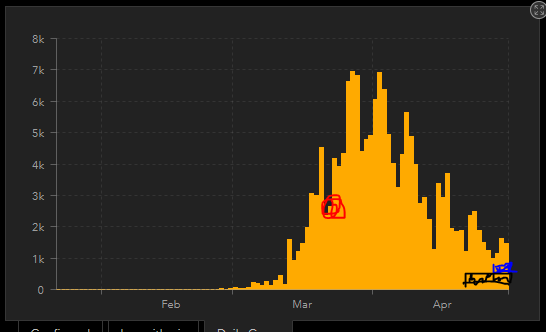
Apakah PSBB di Jerman ini membuahkan hasil? Kalau kita melihat statistik di bawah ini (jumlah daily case), dapat dilihat bahwa setelah beberapa minggu mulai menurun. Tentu saja masih ada kekhawatiran, dan peluang second wave masih sangat tinggi dikarenakan jumlah orang yang keluar rumah sekarang jauh lebih banyak dari sebulan terakhir ini. 


marker merah: PSBB dimulai. marker hitam: PSBB dilonggarkan. marker biru: wajib masker


LESSONS LEARNED


  1. PSBB ITU SANGAT PENTING. Kalau tidak harus keluar rumah, mohon jangan! Kalau bisa WFH, tolong WFH!!!! Saya tau kebanyakan masyarakat Indonesia sangat sosial dan susah untuk tidak bertemu dengan rekannya, tetapi PLEASE TAHAN DULU. Kita beruntung bahwa kita hidup di jaman yang bertemu secara virtual itu gampang. 
  2. JANGAN MENYEPELEKAN.
  3. BANTU SESAMA DENGAN SOCIAL DISTANCING
Semoga tulisan saya kali ini bisa membantu dan terima kasih sudah membaca! 


sumber gambar dan confirmed case:  https://gisanddata.maps.arcgis.com/apps/opsdashboard/index.html#/bda7594740fd40299423467b48e9ecf6


Kamis, 23 Januari 2020

Suka-Duka Kerja di Jerman (part 2)

Setelah 3 bulan (maaf lagi sibuk kerja dan relokasi) akhirnya sempat mengedit lanjutan dari video sebelumnya. Semoga bermanfaat ya!


Sabtu, 16 Februari 2019

Working Part-Time in Germany


Hello everyone!

Before writing about the theme, I'd like to thank you all for reading my blog! I received a lot of emails every month, especially during RWTH registration time. As a person who wrote a blog for fun and only to share experience, I am very touched and happy to know that some people are feeling motivated by reading my posts :) Thank you!!!!

--------------------

After posting a poll on Instagram, most people voted that I should write about my study/work experience in Germany, so here it is! This time it'll be in English so everyone can understand it. I apologise in advance for any typo/grammar mistakes.


--------------------

I'd say Germany is a pretty affordable country to study since most of the Bundesland don't charge their students for an educational fee, which to be honest, could be pretty expensive in other countries. Instead, at least here in RWTH Aachen, we paid around 260€/semester for our transportation, social fee, and so on. The only financial needed before coming to Germany (for those without any scholarship) is the 8640€ blocked account by one of the banks -- which is a lot compared on Indonesians average income, but any other way would be a little difficult. I knew some people who postponed their study here in Aachen to save up some money, but hey, they are here now!

I came to Germany with #ModalNekat (I don't know how to say in English, but it's kinda I flew here with guts and not put very much details of my financial future), but I already set my mind to try to find work as soon as possible. When I still lived in Königswinter during my first semester, I did apply for a few labour work such as working in a hotel or bakery and got some calls for the interview, little did I know back then that I had to have my residence permit in hand before starting to work (I thought my visa would do) so I had to cancel the interview. Better to have some patient rather than working illegally and being deported back!

And since I only lived for a semester in Königswinter, I thought it would be wise to wait for a little bit to find a job when I already moved to Aachen. So when I moved into the new (well now not so new anymore :p) city and settled it, and by seeing my friends getting jobs as well, I was on fire to find something! With the help of google and linkedIn, the first job I applied for was to help the Admin team of one company (let's named it company A). Although I have my Bachelor in Informatics, honestly I didn't have the confidence to code (haha), that was why I was trying to find other jobs but programmer :) I also applied to be a student worker at company B, and those two were the only job I applied so far!

A rejection letter came from company B about a few weeks after I submitted my application. I was upset and sad, of course, since I thought that job was really for me - but in the other hand, I could also understand since most of the jobs need a very good level of German, and my German level was somewhere in intermediate :)

But then, good news from company A, they invited me to an interview, and they even asked me whether I was interested in another student worker position which was more related to computer science. After setting up a schedule for the interview, I couldn't lie but feel that I was pretty nervous. The only interview I had was shortly before I graduated Bachelor, and I didn't get accepted as well -- what if the same thing happened this time? But then my friends told me that they even applied for 30-40 jobs before they got accepted, and honestly, that gave me a boost of confidence. If this one was a fail, then at least it would be an experience for the next one!

Short story, the interview went pretty well (and the office was really cool ;) at least with the free coffee!!!!) and they said they would give be news in two weeks. I didn't apply for other part-time jobs and patiently (well, sent two follow-up emails) waiting before I got the reply back that I got accepted! I was sooo happy since this would be my first paid part-time job here in Germany! In Indonesia, I worked as a teaching assistant and English-tutor for students in middle/high school, but this time it would be something different because the regulation was also different (and tbh, it's Germany, if you know what I meant ;))

As students in Germany, during Uni-time, we are, by law, allowed to work max 20 hours per week (Germans or non-Germans). But when it's holiday time, working is allowed up to 40 hours a week. And especially for those who hold Student Visa, we are not allowed to work more than 120 full-days or 240 half-days a year, so you really have to count your days not to cross it! Important enough to know, mandatory internship from Internship will not be counted in this limited working days, but not mandatory internship will do! So if your course of study didn't oblige you to take one but you want to do an internship (it's very good for experience), just make sure you plan ahead (financially and timely). My suggestion if you want to take 6 months internship is to do it in the Winter Semester since you'll only use 3 months of one year, and 3 months in the year after :)

I got lucky because the working time for me is flexible. In some company, they have set the weekly working hours, but in the company I am working part-time, I can work up to 19.5 hours per week, and I can set my own schedule. Some people found this as a disadvantage since they want to have a fixed income, but for me who was pretty busy that time after moving to Aachen, this was a good opportunity to measure myself about how I can handle work, especially since this was my first time. And since it was a flexible time, I could take as much holiday as I want, but in the other hand, I wouldn't get paid for not working. In some other companies, e.g. the company my flatmate was working, student workers also got an equal amount of 6 weeks of holidays (e.g, if they work only 2 days/week, then they will get 12 days of holidays!) At the beginning I worked normally 10 hours a week, but starting May last year (after coming back for 6 weeks holiday in Indonesia haha), I decided to work more since I need extra money and I have lots of time (I didn't take any class that time hahaha).

What I like the most in working this particular job was that I could use my ability in speaking different languages ;) I have never thought that being able to speak 4 languages, understand (basic level) 6 and can read/write 8 can be used to do something useful and not only for fun! I still remember some of their reaction, e.g. "Wait, you can speak Korean?" "What, you can read and write Arabic???"

Last day of work as student worker T.T
When exchanging stories with other Indonesian students, I was really amazed that they were working in a factory during the holiday! (Most of them were freshly graduated from high school or bachelor students). I admired their guts and spirit to try to stand on by their own feet at a young age :) (If I remember my self, I was pretty spoiled when I was 18 years old hahaha). I had an Indonesian flatmate who was 5 years younger than me, and she woke up early in the morning to get work at a factory (like, around 3am in the morning), and came back looking pretty tired. So if you were reading this and you did that job, four thumbs up for you!!!!!

I believe everyone has different experiences working part-time here in Germany (or in Aachen), but I still couldn't be grateful of how this job has helped me to start earning money by my own and in the end, stopped asking my parents for emergency money. The wage from each company differs, but after talking with some other students, I could say the average was about 10-11€/hour (brutto), and if you can code, it should start at 12€/hour. The highest wage I have heard for HiWi was 17€/hour and that is not in NRW (seriously, I was surprised). But I'd suggest working something that you like (if you can get one) because I do believe you can do a good job if you like the job and not because how much you earn (but on the other hand, don't get underpaid as well:)). And don't forget to balance your study and working time well!

I probably have something more to write, but I will do it when I remember them.

So far, I hope this "short" story can somewhat be useful to you! I hope more story to come in the future ;)

Best regards and have a nice weekend!

p.s: some pics ;)

Dinner at my place with coworkers who turns to be my best friends! :D

Trip to Paris June 2018

my favourite intern :p 
A girls-evening-out after work :D

First business trip to Stuttgart (plus introductory week of
what I should do, that's why he was also on the trip!)


Jumat, 03 Maret 2017

Kuliah di Jerman (RWTH Aachen)

SEMESTER 1 AKHIRNYA SELESAI! (*well, almost...)

Setelah sekian lama tidak menulis akhirnya saya bisa menyempatkan diri saya untuk menulis lagi. Dari dulu sebenarnya mau tulis pengalaman kuliah di Jerman (selama ini cuma tau sistem sekolahnya saja) dan akhirnya bisa kesampaian menulis setelah 1 semester hampir berakhir.

Bagi yang baru pertama kali membaca blog saya, izinkan saya memperkenalkan diri: Dala, 22 tahun, baru menikah, dan sementara lagi menempuh pendidikan S2 di RWTH Aachen University bersama suami :D Jurusan yang saya ambil adalah Media Informatics.

depan kampus :D

Semua yang saya tulis berdasarkan pengalaman saya kuliah di ITS dan di RWTH Aachen, mungkin ada beberapa persamaan dengan univ-univ lainnya di Jerman maupun di Indonesia. Oh iya sebagai tambahan, bahasa pengantar yang saya ambil adalah bahasa Inggris, jadi mungkin saja pengalaman saya berbeda dengan yang mengambil kuliah dengan mata pengantar bahasa Jerman.

Di Jerman....

SPP = Rp 0.
Salah satu alasan saya untuk menempuh pendidikan di Jerman (maklum beasiswa Ayah Bunda) adalah biaya SPPnya yang 0 rupiah atau 0 euro. Tetapi meskipun tidak membayar uang kuliah, setiap mahasiswa harus membayar uang transpor+uang sosial sebesar kurang lebih 4 juta per semester. Dengan membayar uang semester tersebut (bukan SPP loh ya), setiap mahasiswa akan mendapatkan tiket kereta/bus/tram/metro yang bisa dipakai selama satu semester. Lokasinya tergantung provinsi mana universitasnya, untuk Aachen yang berada di provinsi North-Rhine Westfalia, kami bisa berpergian sesuka hati kami di satu provinsi. Itu berarti bisa ke Düsseldorf, Köln, Essen, Padderborn tanpa membayar apapun! Jadi, 4 juta bisa dibilang cukup murah (biaya 1 kali naik bus jarak pendek di Aachen sekitar 20rb, dan naik kereta Aachen-Köln sekitar 100-150rb).


HAH? ABSEN? ITU APA?
Bagi kalian yang mungkin sering telat bangun, mager ke kampus, atau lebih senang belajar sendiri, mungkin Jerman merupakan negara yang tepat. Sebenarnya tergantung dosennya apakah mewajibkan untuk masuk kelas apa tidak, tetapi kebanyakan dosen tidak mewajibkan mahasiswanya untuk berada di kelas. Tetapi tetap saja berada di kelas dan memperhatikan dosen menjelaskan merupakan nilai plus karena belum tentu semua pertanyaan yang keluar di ujian ada di slide yang telah dishare (pengalaman pribadi ._.v).


TIDAK ADA REBUTAN AMBIL KELAS.. (yang ada dikick dari kelas)
Salah satu yang saya rindukan tetapi tidak ingin mengalami lagi adalah berebutan ambil mata kuliah pada awal semester. Menurut saya sudah cukup kekecewaan yang dirasakan ketika kelas yang diinginkan telah habis, atau rasa betrayal yang dirasakan ketika sedang bertransaksi tukar kelas tetapi ada yang tiba-tiba mengambil slot (ehe). Sudah cukup juga sindiran-sindiran yang ada di wall facebook karena kelas penuh oleh angkatan lebih muda (ehe, saya juga termasuk angkatan muda yang sering mengambil mata kuliah angkatan atas ._.v)...

Di universitas saya sekarang, well setidaknya di jurusan saya, tidak ada rebutan kelas. Tinggal daftar dan datang saja ke kelasnya. Adanya nanti setelah minggu pertama akan dilihat siapa yang dikeluarkan dari kelas jika kuotanya tidak mencukupi. Biasanya diprioritaskan mahasiswa yang wajib mengambil mata kuliah tersebut. 


IKUT UAS HARUS DAFTAR LAGI
Rajin datang di kelas bukan berarti harus mengikuti ujian semester itu juga. Salah satu sistem yang menurut saya pribadi rempong tapi life-saving adalah setiap mahasiswa wajib untuk mendaftar jika ingin ikut ujian. Pendaftaran biasanya dibukan 2 bulan sebelum ujian dan ada waktu batas pendaftaran. Kalau terlewat maka goodbye... ujiannya tahun/semester depan. Memang rempong, tetapi bagi yang merasa dirinya tidak sanggup untuk lulus semester ini, bisa skip ujian dulu dan mengambil ujian tahun depan.


UAS = YOUR FINAL GRADE
Ada banyak mata kuliah yang menjadikan nilai ujian akhir sebagai nilai akhir. Menurut saya hal ini menguntungkan bagi mahasiswa yang tidak suka mengerjakan tugas (karena rata-rata tugas di sini tidak wajib dikerjakan/tidak dinilai/pra-syarat ujian), tetapi tidak menguntungkan bagi mahasiswa yang terbiasa SKS aka sistem kebut semalam karena tidak mungkin bisa lulus ujian hanya dengan belajar sehari.


GAGAL UAS? BISA REMEDIAL
Setiap mahasiswa diberikan kesempatan untuk mengikuti 3 kali ujian tertulis dan 1 kali ujian lisan untuk setiap 1 mata kuliah. Kalau lulus pada ujian pertama, Alhamdulillah. Kalau tidak lulus, mahasiswa diberi kesempatan untuk ikut ujian kedua. Bobotnya sama dengan ujian pertama, jadi misalnya jika dapat A di ujian kedua, nilai akhirnya juga A. Bukan seperti di Indonesia yang memberikan nilai max 75 untuk remedial (ini dulu di SMA saya).

Saya memanfaatkan sistem ini untuk mengikuti ujian pertama di satu mata kuliah. Karena saya jarang masuk, saya yakin ujian saya tidak lulus, tetapi saya ingin tahu soalnya kira-kira seperti apa, jadi saya ikut mengikuti ujian pertama. Dan ketika mendapat hasil bahwa saya gagal, saya harus remedial dan sekarang saya memiliki 2 kesempatan untuk ikut ujian tertulis dan 1 kali ujian lisan (jika tidak lulus 3 kali ujian tulis).

Apakah akibatnya jika gagal 3 kali ujian tertulis dan 1 kali ujian lisan?
Menurut kabar yang saya dengar, mahasiswa yang telah gagal ujian sebanyak 4 kali akan di drop out dan akan sangat sulit sekali untuk pindah universitas (malah ada yang bilang sudah tidak bisa kuliah di Jerman lagi). Jadi tentunya kuliah di Jerman bukan buat mahasiswa yang berpikir "masih ada semester depan ngulangnya", karena ngulang mata kuliah di sini perlu dipikir-pikir terlebih dahulu...


DAFTAR LAB/SEMINAR SERASA DAFTAR KERJA
Untuk jurusan Informatika secara general, biasanya diwajibkan bagi setiap mahasiswa untuk mengikuti lab/seminar. Kalau jurusan saya, setiap mahasiswa wajib mengikuti 2 lab dan 1 seminar. Kalau di jurusan suami saya (Software Systems Engineering), wajib 1 lab dan 2 seminar. Lab/praktikum berbobot 7-10ECTS dan seminar biasanya 4ECTS. Output dari seminar adalah paper.

Nah, jika daftar kuliah lebih flexbile, daftar lab/seminar tidak seflexible itu. Di portalnya, setiap mahasiswa bisa memilih seminar/lab apa yang mereka inginkan berdasarkan prioritas (1, 2, 3). Jatah tiap mahasiswa maksimal 2 lab/seminar tiap semester. Jumlah tiap lab/seminar sekitar 10-16 orang (mungkin juga ada yang 20).  Pada saat pendaftaran waktu itu, kami disuruh menulis semacam CV (keahlian dan pengalaman dll) dikarenakan dosen sendiri yang akan memilih peserta seminar/lab. Alhasil saya melihat banyak kekecewaan pada teman-teman saya ketika mereka tidak dipilih untuk lab/seminar yang mereka inginkan. Saya sendiri Alhamdulillah dapat lab yang saya inginkan untuk semester ini (lab Blockchain, siapa tau ada yang kepo ._.v)


Untuk sementara itu yang bisa saya tulis, tulisan selanjutnya lebih membahas pengalaman pribadi kuliah di jurusan Media Informatics :D 

Terima kasih karena telah membaca blog saya. Jangan sungkan-sungkan untuk bertanya melalui komentar atau email ke dala.rifat27@gmail.com ketika memiliki pertanyaan.

Dala :)